2003. I took my very first photography class my senior year of college. I remember I just wanted to learn how to take crisp photos with blurry backgrounds like the professionals.
We had to purchase a heavy duty camera with exchangeable lenses (called a SIngle Lens Reflex or SLR).
I purchased a NIkon N65 with a kit lens. I arbitrarily chose a Nikon camera based on a line from the movie “Gotcha” featuring Anthony Edwards.
“You jumped in the moat with MY Nikon?”
Yeah. Nikons must be top of the line then?…
Anyway, In this class, we would learn to develop our own film in a dark room using developing chemicals, and our own photo-paper.
It is a painstakingly slow and difficult process and it takes a LOT of trial and error to do it properly.
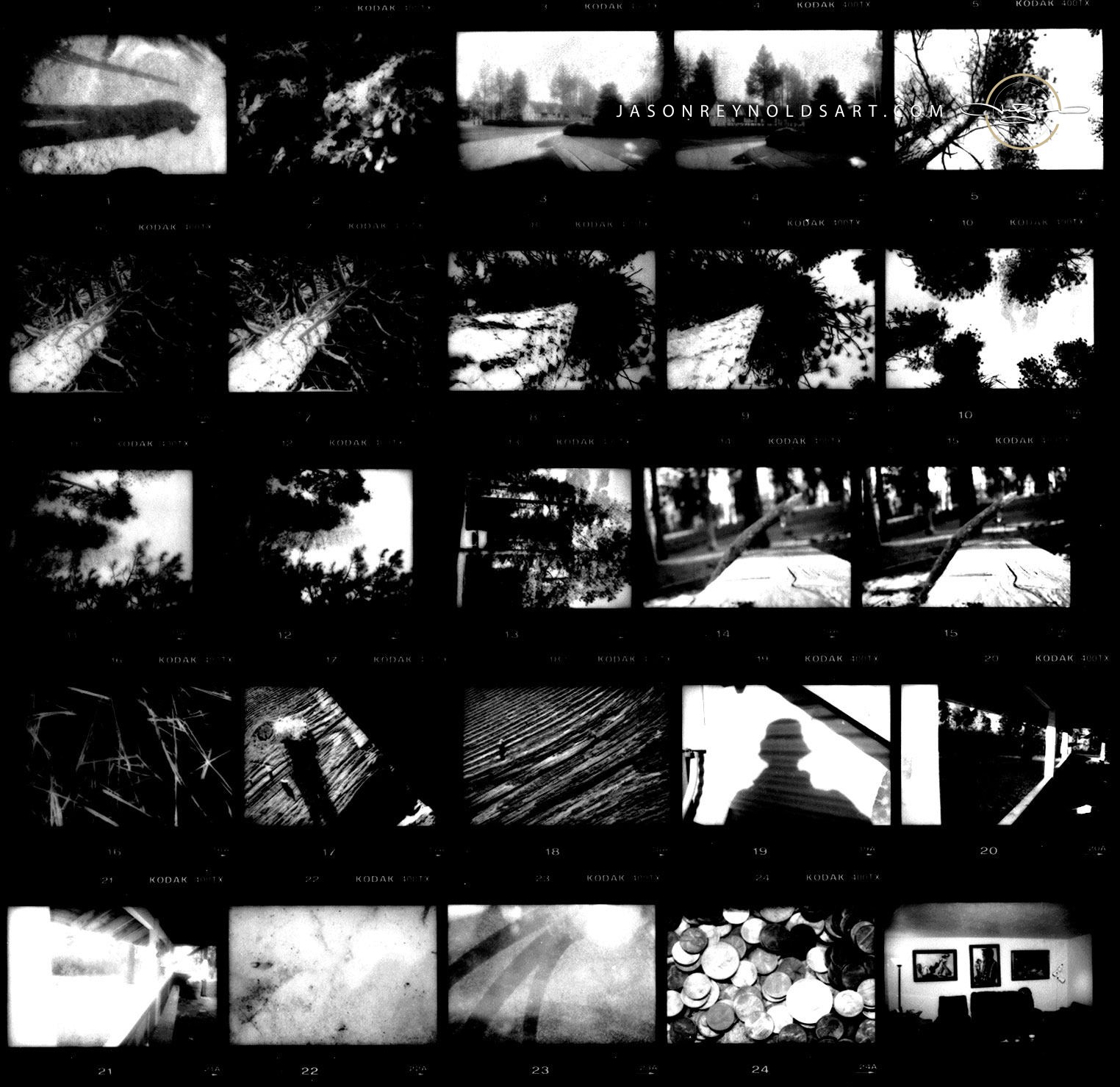
This is called a “print sheet.” Basically, you take the roll of film, cut them into strips and develop thumbnails of all your shots on one sheet of photo paper. This is how you would see what shots turned out. Then, you develop any one of the photos individually.
There are no “undo” buttons when developing your own film so if you overexposed something in the dark room (gave it too much light for too long), the image would ‘blow out’ and the highlights and details would start fading. Not long enough, and the photos would be too dark.
The concept is a lot like cooking food in the oven. You have to “know” when your photo is “done” so you don’t undercook it or burn it.
Then, there was this one kid who came in with a fancy shmancy DIGITAL-SLR camera. The thing must have cost him a BOATLOAD back in 2003 and the instructor didn’t have the heart to tell him that a film camera was required.
He didn’t realize that most of the class time would be spent in the dark room developing film… but the teacher let him in the class anyway. And he didn’t do ANY of the developing the rest of us did.
I remember being pretty brutal on his photos in our critiques. Yeah, the photos he took may look better because they are ‘digital,’ but I knew a thing or two about digital imaging (being a graphic design MAJOR) so I could tell him how his photos could be improved, both compositionally AND digitally. What you can do in Photoshop with a little ‘slider’ to adjust brightness or contrast takes HOURS and multiple attempts in the darkroom to do it manually.
We spent a little time learning the actual technique of being a phototographer and I learned about aperature and shutterspeed, (but not about ISO strangely).
I wish I could have developed all of my photos I took in that class, but it was only a month long and it would have taken me an entire semester at least.
This class was my foundation in the principles of photography.